As home buying and selling activity picks up across the Greater Toronto Area (GTA), and if you are seriously considering buying or selling this year, you might want to add getting a home appraisal to your checklist.
In this week’s blog post, we will focus on Home Appraisals – their purpose, value, types, and cost. And why getting your residential property appraised is important before you decide to sell or buy your home, townhouse, or condominium, etc.
What is a residential appraisal?
Homeowners can choose to get a residential appraisal of their property for a variety of reasons. But they must engage a licensed or certified appraiser to conduct the same. An appraiser assesses the current and approximate market valuation of a property, which is usually determined by several factors, such as location, size, condition, age, features, property values/recent home sale trends in the neighborhood or region, etc.
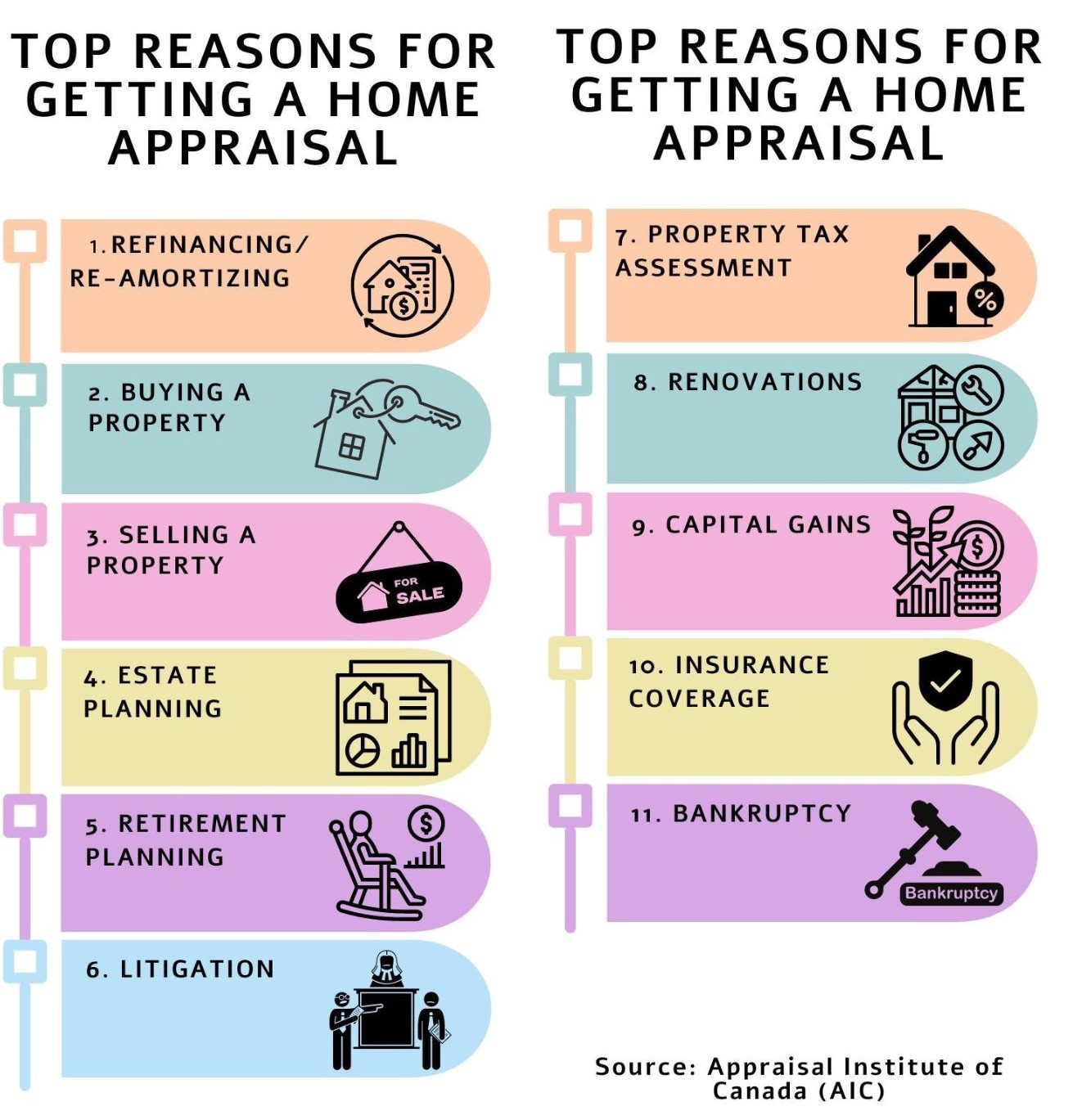
A homeowner typically gets their home appraised if they plan to sell that property, buy another, refinance their home mortgage, or need to have their house evaluated for tax assessment purposes. Costing anywhere between $300-$600, this fee is usually paid by the homebuyer or the person negotiating/renegotiating the mortgage.
Why get a residential appraisal?
Sellers opt for an appraisal to get a better sense of what their listing price should benchmark at. It also insulates them against any unpredictability in the sales process as they are already quoting a fair market value for their property.
For buyers, an appraisal allows them to estimate their spending budget, as very often the appraised value of a property they are considering buying will turn out to be lower than the listing price fixed by the seller. This can potentially impact the financing for the purchase, with the buyer being asked by the lender or bank to make a larger down payment to meet borrowing requirements.
In cases where the purchase agreement includes an appraisal contingency clause, the buyer can simply decide to walk away if they do not have the extra cash for a bigger down payment.
Key Information Appraisers Seek
- Physical characteristics of the house and any other external structures.
- Original date of construction, information about any major repairs/renovations done.
- Interior/exterior home finishes, layout, physical measurements, parking space, etc.
- Condition of the heating and cooling equipment, appliances, lighting fixtures, etc.
- Examine the quality of renovations/repairs, if done recently.
- Sales/listing history of the property.
- Neighborhood characteristics, such as location, proximity to transit, schools, other educational and recreational facilities, etc.
- Information on comparable residential properties in the area.
We hope that the information shared above gives you a better understanding of the process involved in getting your property appraised. Just make sure you hire a licensed professional, who takes the time to explain the appraisal process to you, along with getting your permission to gather the necessary information needed to complete the appraisal.
Some Useful Resources for Additional Information
Appraisal Institute of Canada (AIC)
A Consumer’s Guide to Understanding the Residential Appraisal Process
As always, if you have any questions or need further information, please feel free to get in touch with the RE/MAX Royal Team Sachdeva Realty team.
Have a great weekend!