Welcome to the RE/MAX Royal Team Sachdeva Realty blog page, where we share information based on our decades-long expertise in the GTA real estate market to help buyers and sellers make informed and sound housing choices.


Jan. 19, 2024

Housing in the GTA-Townhome Living

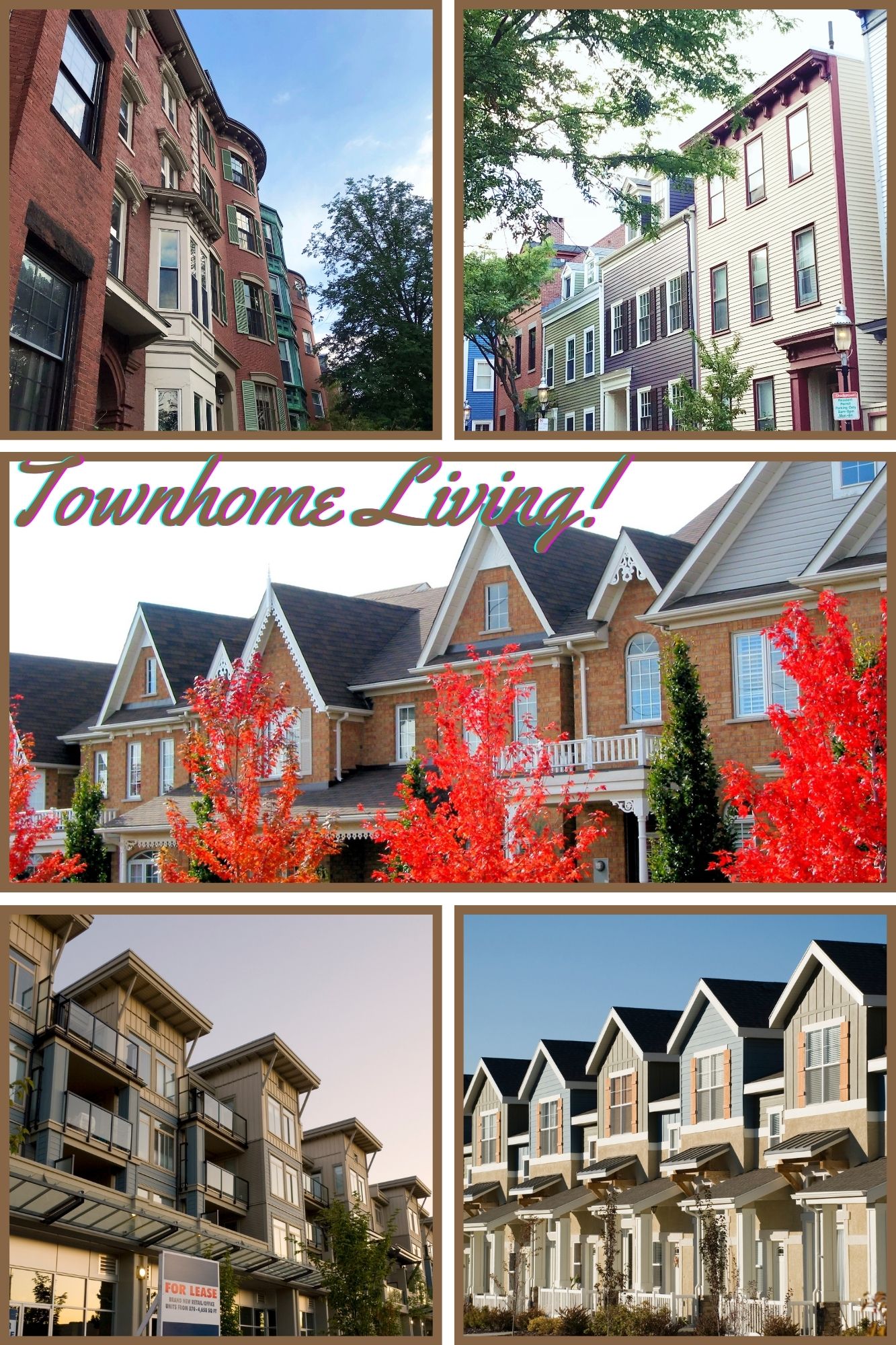
Toronto and the broader region offer a multitude of choices to buyers interested in purchasing a townhouse as opposed to a condominium or a detached home. Townhomes are frequently preferred by first-time buyers as they offer more space and independence (compared with condos) and are more affordable than detached homes.

Typically, townhouse housing options in the GTA can be broadly categorized as follows:

  • Freehold townhouse – The homeowner owns both the house and the land the townhome is built on and is solely responsible for its maintenance.
  • Condominium townhouse – The homeowner only owns a percentage of the corporation that runs the condo townhouse complex. He/she is expected to pay a monthly maintenance fee to the condo corporation but is solely responsible for any maintenance costs arising inside the townhouse.
  • Stacked townhouse – Under this concept, homeowners own each of the two or more individual townhomes stacked on top of each other, with private access built in for each individual townhome. Again, a maintenance fee is paid to the condo corporation.

The Positives of Townhome Living/Investment

  • Affordability – Townhome ownership is often preferred by first-time buyers looking to enter the real-estate market, given its lower prices in comparison with detached homes on account of a townhome’s shared walls with other units in the complex and less outdoor space. Maintenance costs for townhomes, though varied, are also far less than those for a detached home, and mostly lower than those for a condominium apartment.
  • Shared amenities and community living – Townhome complexes usually offer a range of recreational and shared community spaces, such as pools, playgrounds, entertainment areas, meeting halls, etc. that are usually maintained by the condo townhouse corporation or a homeowner’s association.
  • Location, utilities, and extras – Townhome complexes are usually located in prime real-estate areas in cities, such as Toronto. It costs less to heat a townhome, and a townhouse complex usually comes with private parking space, which is a big plus in a city like Toronto.

The Negatives of Townhome Living/Investment

  • Noise levels – The bulk of condominium townhouse units share walls with the unit next door and/or on either side, which can make noise levels emanating from either side a concern. However, a townhome corporation’s community rules, as well as the use of good soundproofing material inside the units can help contain noise levels to a minimum.
  • Privacy concerns – Given the close proximity of townhomes in a community and the way they are built, they typically offer far less private outdoor space, compared with a detached home. This is something prospective buyers should take into consideration if privacy is a major factor driving buying preferences.

Some Useful Tips for Townhome buyers

  • Home and neighborhood inspection – It is always advisable to have the property you are considering buying inspected thoroughly (plumbing, air conditioning, electrical fixtures, etc.) especially if the townhouse is freehold or old construction. Similarly, survey the townhouse complex to get a better sense of the parking, community, and shared spaces, and the overall feel of the neighborhood in terms of safety, traffic, and noise levels.
  • Condominium townhome corporation rules and status – You should be fully aware of the rules and regulations followed by the condo corporation or homeowner’s association before taking a buying decision. It is also a good idea to have a lawyer review the condo corporation’s status certificate to determine its financial and legal standing, as well as its framework for calculating maintenance fees—for both the current and future scenarios.

As always, we at RE/MAX Royal Team Sachdeva Realty are available to assist you in your search for a new townhome, share any information you need about the GTA townhouse market, and offer other useful guidance to buyers and sellers.

 

Jan. 12, 2024

Housing in the GTA-Condo Living

The Positives of Condo Living/Investment

For the growing influx of new immigrants into Canada, buying a condo offers a great way to get a foothold into Canada’s pricey real estate market. Condominiums are much more affordable than detached or semi-detached homes and over time have also proven to be a great real estate investment option.

Given their ease of maintenance and considering that everything outside your unit is managed by the condominium corporation, including common areas and shared facilities, they are also preferred by empty-nesters or seniors looking to downsize or make a high-return investment.

As we mentioned last week, lower interest rates and more lenient borrowing benchmarks could possibly free up a lot of condo supply in the GTA during the year ahead. This offers first-time buyers or even investors a good window of opportunity to enter or dive back into the GTA real estate market. At the same time, the expected strong surge in housing activity in the GTA would greatly benefit sellers too, who should see a significant uptake in demand for condo housing.

Some Useful Tips for Condo Buyers

Location, location, location – Condominium complexes are an essential element of the contemporary urban living landscape and are usually located close to the downtown core in most cities. For this reason, they also offer great accessibility to public transit networks, city centers, schools/colleges, etc. but be sure to check all these aspects when you are exploring Toronto’s condo market.

Size, layout & amenities – For small families and young professionals, most modern condo buildings offer plenty of choice in terms of an open-concept layout or more contained units, coupled with a slew of amenities, such as underground parking, swimming pools, fitness centers, and community/recreational spaces. Be sure to check for the ones that matter to you most!

Maintenance fees – All condominium complexes are managed by a corporation or condo owner's association with the help of funds generated from a monthly maintenance fee paid by each condo owner should also be factored into your budget.

Some Useful Tips for Condo Sellers

Price your condo right – A sluggish GTA real-estate market is expected to see a significant rebound this year, but most market forecasts predict the recovery to favor buyers, which makes pricing your condo right even more crucial. So do your research to determine why your property is worth the price you peg on it.

Ensure your condo is ship-shape – Before putting your property on the market, make sure that your unit is ready to move in and if it needs any renovations, repairs, or upgrades. An appraiser can help you with that. While these costs will be incorporated into your final price, they will also significantly boost your chances of attracting multiple buyers for your unit.

Showcase your unit and its surroundings – Hire a staging company to reflect the best features of your condo unit. Highlight the amenities that your condominium building or complex offers, and the positives of the neighborhood it is located in.

For Buyers and Sellers

Hire a good realtor! In addition to their expertise and deep knowledge of the market and specific neighborhoods, a good real estate agent can help you understand how to best market your property, as well as help you navigate your journey to becoming a condo owner or selling your condo.

As always, we at RE/MAX Royal Team Sachdeva Realty are available to assist you in your search for a new condo, share any information you need about the GTA condominium market, and offer other useful guidance to buyers and sellers.
Jan. 5, 2024

What To Expect From The GTA Housing Market in 2024?

Are you a prospective homebuyer or seller? Are you an investor looking to enter or exit the GTA real-estate market this year? With rate cuts in early 2024 expected to ease borrowing pressures, sale prices across the GTA continuing to trend lower, and a more robust housing inventory providing a much-needed fillip to the GTA housing market, experts are predicting 2024 to be a buyers/balanced market.

Housing sales activity in the GTA hovered near two-decade lows for most of last year, with the exception of a slight uptick in the spring. At the same time, housing affordability remains a serious concern for most buyers, especially first-time buyers, who are wary of getting locked into an expensive mortgage or overpaying for their first home.

Overall, housing prices are expected to slip 3 percent (as per RE/MAX’s 2024 housing outlook), which should further bolster and prime the market for prospective buyers, pushing sales up by about 10.4 percent (as per RE/MAX’s 2024 housing outlook).

Where does this leave the sellers?

Real estate in the GTA has historically drawn considerable investment dollars, especially the condominium market. But as of November-end, the Toronto Region Real Estate Board reported a sharp 47 percent drop in new condo sales, compared with the same period in 2021. This might propel more condo owners to offload investment properties as they become increasingly harder to hold on to in view of pricier mortgages.

Condos are often the preferred housing option for young professionals or empty nesters looking to downsize. Their enduring appeal is also based on the fact that owning a condominium allows you to enjoy all the advantages of homeownership, coupled with varied perks (in-house fitness centres, swimming pools, recreational areas, party rooms, etc.!) and minus the hassles related to homeownership. It offers, in many ways, the perfect urban-center living experience, which the condominium market in the Greater Toronto Area certainly does.

Given the current economic conditions and forecasts for 2024, we are confident that the GTA condo market will see a significant recovery. So, for our next newsletter, lookout for our insights into buying and selling strategies for the condominium market. In the meantime, we are always available to assist you with any information relating to your housing requirements. Once again, we wish you a wonderful year ahead!

Dec. 28, 2023

The GTA Housing Market In 2023, And A Look Ahead At 2024

Even as the construction of new condominium complexes continues unabated, high interest rates, slumping demand, and record housing prices continue to deter first-home buyers from venturing into the GTA’s real-estate market in 2023. What can you—our existing clients (old and new) and prospective clients—look forward to in 2024. Here’s a quick snapshot:

Toronto’s Condo Market

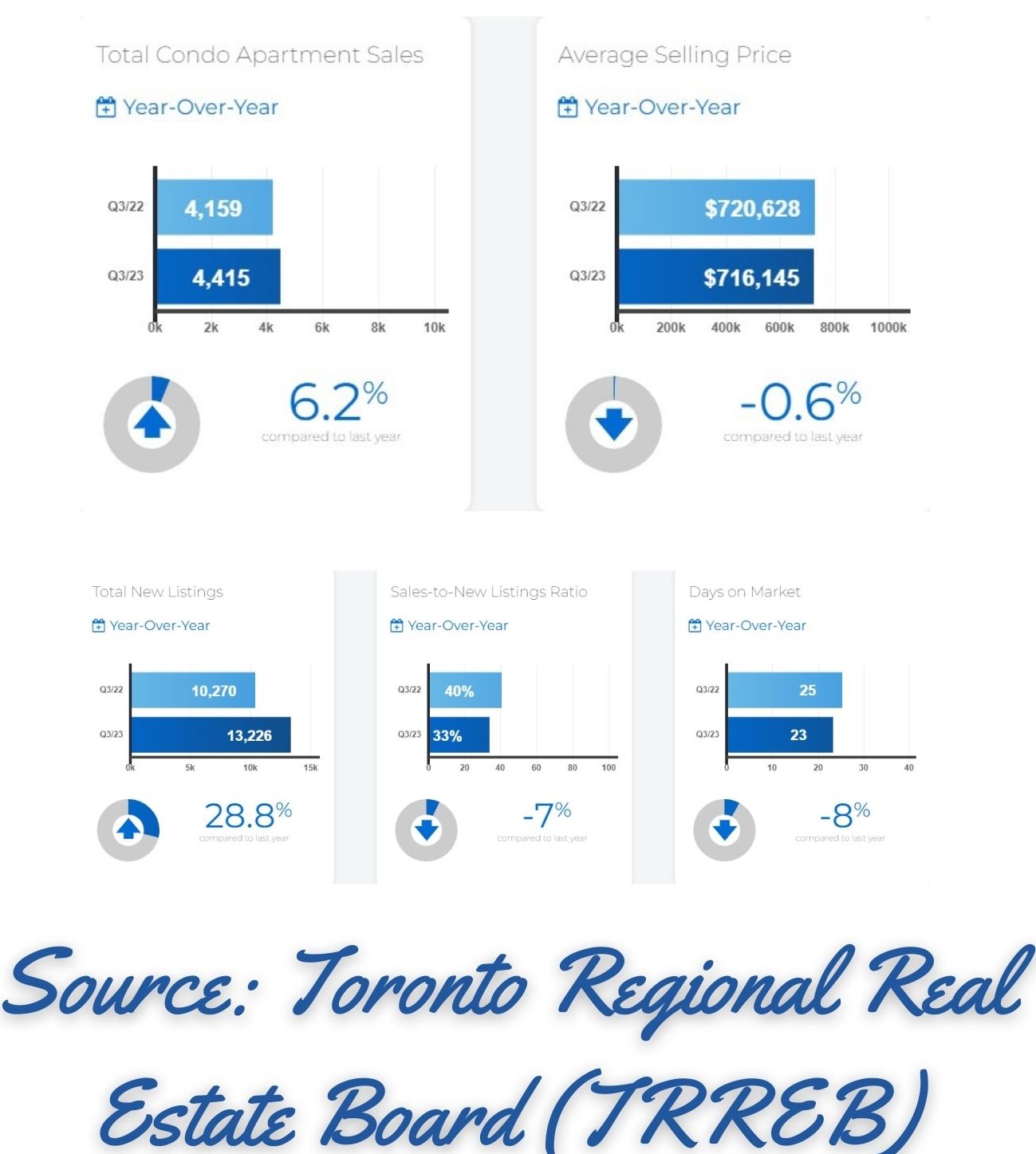
Given the persistent unaffordability and limited housing stock in the GTA market, condominiums continue to be the preferred choice, as opposed to detached properties and townhomes, for first-time homebuyers. However, as condo prices continue to rise at a faster rate than other housing types, buyers continue to be skeptical of their buying abilities. This was also reflected in Toronto’s condo market trends during 2023. (source: Remax)

  • Overall, Toronto’s new condo sales fell 47% year-to-date in 2023.
  • Condo sales hit their lowest levels in a decade.
  • As per data from the Altus Group, condo sales in Toronto trended 29% below a 10-year average.

However, lower borrowing costs in 2024 are expected to alleviate condo affordability concerns around what has traditionally been viewed as an entry point into homeownership for first-time buyers.

Toronto’s Housing Market

Increasingly out-of-reach home prices in the GTA continue to raise the red flag on housing affordability in Canada’s financial capital and more broadly across major urban centers in Canada. A tough economic environment and continuing inflationary pressures have weighed down housing demand to some extent, but the record swell in population growth and a healthy recovery in economic activity have ensured a steady uptick in housing prices. Here’s what current pricing trends (source: Remax) in Toronto look like:

  • Detached: Up 8.2% to $1,718,440
  • Semi-Detached: Up 4.7% to $1,278,347
  • Townhome: Up 1.1% to $1,017,094
  • Condo Apartment: Down 1.7% to $729,160

However, expected rate cuts in the first half of 2024 and improved borrowing conditions should be encouraging signs for anyone looking to enter the Toronto housing market for the first time, or for returning real-estate investors. So, we would encourage you all to start doing your homework in anticipation of the expected rebound in the GTA housing market. Here a few quick tips for first-time homebuyers:

  • Get pre-approved by your bank/lending partner.
  • Gather all the necessary documents you’ll need.
  • Read the fine print on your pre-approval.

And as always, feel free to get in touch with the RE/MAX Royal Team Sachdeva Realty team if you have any questions or concerns.

We look forward to being in touch with you in 2024 as your trusted real-estate resource. Here’s wishing you all a Happy New Year in advance!

Dec. 14, 2023

First Time Homebuyers... How Can You Find The Right Agent?

Becoming a homeowner for the first time is an important life milestone. With housing affordability increasingly out of reach for so many in Canada, for those who are in the fortunate position of buying a new home, choosing the right Realtor is a crucial first step in what can be a drawn-out and complicated process. If you are new to Canada or the housing market, here are some important tips on how to go about finding and choosing the right Realtor.

  • Start your research on the housing market and where you would like to live before you speak with an agent.
  • Ask your Realtor for information on market data and analysis to make a more informed decision.
  • Use online platforms and websites to research local real estate agents. Look for reviews, testimonials, and ratings to gauge their reputation and track record.
  • Look for an agent with experience in the specific area where you're looking to buy. An agent familiar with the local market will have valuable insights and can guide you effectively.
  • Don't settle for the first agent you meet. Interview multiple agents to get a sense of their communication style, experience, and approach. Ask about their knowledge of the local market.
  • Ideally, choose an agent who is solely representing you and not the seller as well.
  • A good real estate agent should be tech-savvy and use modern tools and platforms to enhance the buying process. This can include online listings, virtual tours, and digital communication.
  • Ensure the agent has the time and availability to dedicate to your search. If they are too busy, they might not be able to provide the attention your home-buying process requires.
  • Understand the agent's fee structure upfront. Most commonly, the seller pays the agent's commission, but it's essential to be clear on all costs involved.

A good real estate agent will:

  • Be Honest and Trustworthy
  • Listen to you
  • Be mindful and respectful of your preferences
  • Let you set the pace

Agents at RE/MAX Royal Team Sachdeva Realty are skilled in understanding and responding to the specific needs of buyers. We understand the complexity of the housing market and make every effort possible to make the experience of first-time buyers as stress-free as possible!

Dec. 14, 2023

Canadian Housing Affordability Crisis and Emerging Trends in Toronto’s Real Estate Market for 2024

Here is a snapshot of the real estate market, supported by key data and forward-looking trends.

TORONTO, December 12, 2023

  • Sales in November 2023 fell year-over-year.
  • Housing sales in November slumped to lows last seen in 2008.
  • Housing supply expanded year-over-year.
  • Selling prices remained flat year-over-year, giving buyers more choice and leverage.
  • Higher borrowing costs & inflationary pressures continue to impact affordability.
  • Expected rate cuts in H1 of 2024 to ease borrowing pressures.

Housing Affordability Crisis

  • Housing affordability in Canada has reached a breaking point according to the Urban Land Institute (ULI) and PwC Canada’s annual Emerging Trends in Real Estate 2024 report.
  • The crisis has been a long time coming with governments being criticized for slow action to address the problem.

Projected Housing Gap

  • The Canada Mortgage and Housing Corp. (CMHC) projects a significant gap between supply and demand going forward, with only 18.2 million units available by 2030 against demand for 22 million units needed to restore affordability.
  • Efforts to provide affordable homes for low-income Canadians need to be differentiated from efforts to provide attainable housing for a broader spectrum of buyers and renters.

Migration to Affordable Places

  • The housing crisis has resulted in the forced migration of buyers to more affordable communities, prompting them to leave expensive cities, such as Toronto, Montreal, and Vancouver in favour of neighbouring communities or other provinces, such as Alberta.
  • The Kitchener-Waterloo-Cambridge area in Ontario stands out as having benefitted from this trend.

Urgent Areas for Action

  • Government housing policies at the municipal, provincial, and federal levels need to be better aligned.
  • Efforts to solve the labour shortage, debt capital for rental projects, and innovative approaches to increase supply are crucial to addressing the housing crisis.


Dec. 7, 2023

Elevated Borrowing Costs Taking a Toll on Housing Affordability

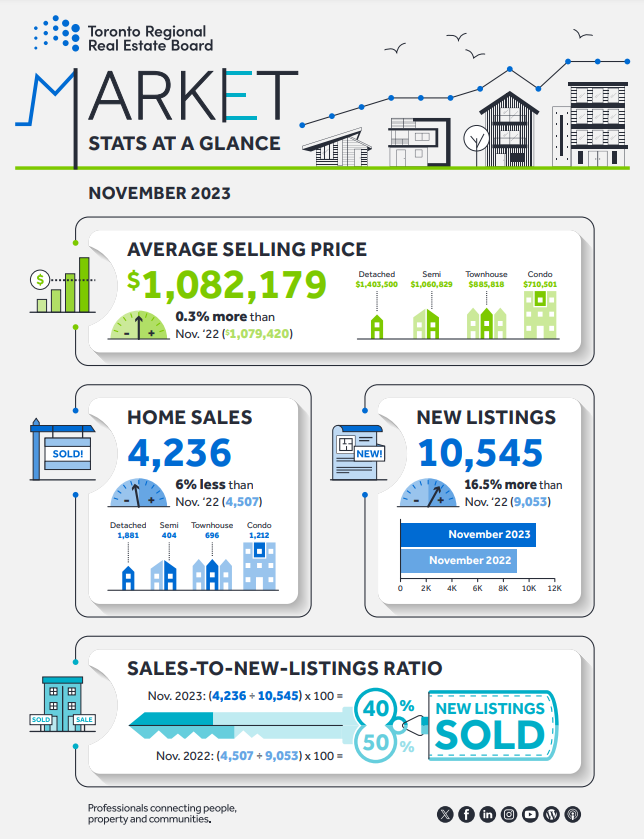
TORONTO, December 5, 2023 – High borrowing costs and uncertain economic conditions continued to weigh on Greater Toronto Area (GTA) home sales in November 2023. Sales were down on a year-over-year basis, while listings were up from last year’s trough in supply. With more choice in the market, selling prices remained basically flat year-over-year.

“Inflation and elevated borrowing costs have taken their toll on affordability. This has been no more apparent than in the interest rate-sensitive housing market. However, it does appear relief is on the horizon. Bond yields, which underpin fixed rate mortgages have been trending lower and an increasing number of forecasters are anticipating Bank of Canada rate cuts in the first half of 2024. Lower rates will help alleviate affordability issues for existing homeowners and those looking to enter the market,” said Toronto Regional Real Estate Board (TRREB) President Paul Baron.

GTA REALTORS® reported 4,236 sales through TRREB’s MLS® System in November 2023 – a six per cent decline compared to November 2022. Over the same period, the number of new listings was up by 16.5 per cent. On a seasonally adjusted monthly basis, sales edged up compared to October 2023, while new listings were down by 5.5 per cent.

“Home prices have adjusted from their peak in response to higher borrowing costs. This has provided some relief for buyers, from an affordability perspective. As mortgage rates trend lower next year and the population continues to grow at a record pace, expect demand to increase relative to supply. This will eventually lead to renewed growth in home prices,” said TRREB Chief Market Analyst Jason Mercer.

“Houses and condos are meant to be homes, first and foremost. We know the demand for homes, both rental and ownership, will grow for years to come. We have seen some productive policy decisions recently that should help with housing affordability, including allowing existing insured mortgage holders to switch lenders without the stress test. Additionally, in the interest of household and economic stability, we continue to call on the Office of the Superintendent of Financial Institutions (OSFI) to apply the same approach to uninsured mortgages. It also goes without saying that further policy work is required to bring more supply online,” said TRREB CEO John DiMichele.

Source: Toronto Regional Real Estate Board (TRREB) News Release, December 5, 2024


March 25, 2010

Hard Lofts in Toronto

A hard loft is a type of residential conversion in which an industrial or commercial building is converted into living space. These buildings typically have high ceilings, large open spaces, and exposed brick or concrete walls. They are called "hard" lofts because they are typically found in older, industrial buildings that have been converted, rather than in new buildings that are designed to look like industrial lofts.


  1. Character and Charm: Hard lofts often feature unique design elements such as exposed brick walls, high ceilings, and industrial finishes that give them a one-of-a-kind character and charm.

  2. Spaciousness: Hard lofts are known for their open floor plans and high ceilings, making them feel larger and more spacious than traditional apartments.

  3. Location: Many hard lofts are located in trendy, urban areas, which makes them highly desirable to buyers who want to be close to restaurants, nightlife, and other amenities.

  4. History: Hard lofts are often housed in historic buildings, which can add a sense of history and uniqueness to the living space.

  5. Industrial Design: The industrial design aesthetic of many hard lofts can be highly desirable, especially to buyers who appreciate the raw, unfinished look of exposed brick and concrete.


  1. Natural Light: Many hard lofts feature large windows that allow for plenty of natural light, making them feel bright and airy.

  2. Amenities: Many hard loft buildings offer amenities such as rooftop terraces, gyms, and community spaces, which can be appealing to buyers.

  3. Low Maintenance: Hard lofts often feature low-maintenance finishes such as concrete floors, which can make them appealing to buyers who want to spend less time on upkeep.

  4. Flexibility: Hard lofts often have open floor plans, which can make them flexible and easy to customize to suit individual needs.

  5. Appreciation: Hard lofts are often considered to be a desirable form of real estate and may appreciate in value over time, making them a smart investment.