
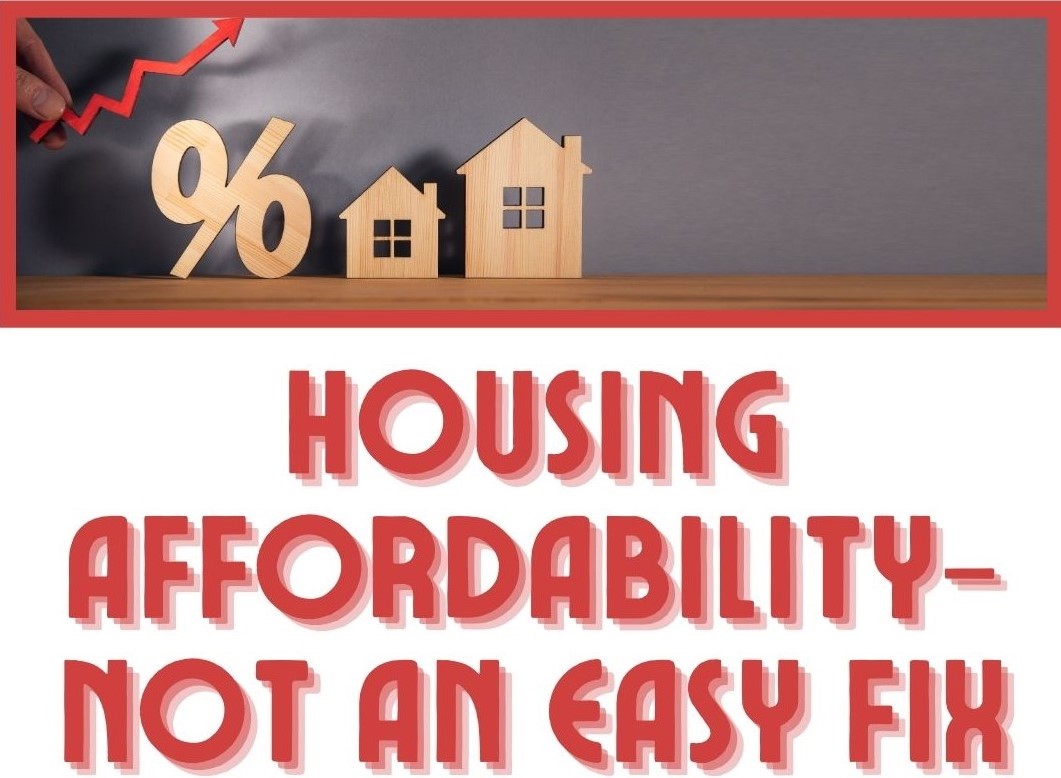
Last week, the Bank of Canada announced its steepest interest rate cut, slashing it policy rate by 50 basis points to 3.75 percent. With the exception of the pandemic, such a drop in the key interest rates was last seen during the height of the financial crisis in 2009.
News about the rate cuts and analysis of their varied impacts on Canada’s struggling housing market have become almost routine during the summer and ensuing months. However, they have largely failed to achieve their intended impact, which was to provide a marked fillip to housing market activity.
Do lower interest rates make it easier for you to buy a home?
If you are a prospective home buyer, especially a first-time home buyer, you should keep track of these continuing changes in interest rates as they significantly impact how much you end up paying for your home’s monthly mortgage payments. At the same time, borrowing costs, whether in the form of mortgages or other financial instruments, such as home loans, etc. are only one piece of the bigger puzzle that makes up the broad contours of the housing market and homeownership at the individual level.
Overarching economic and market forces, such as the rates of inflation and economic growth, unemployment rates, income or wage growth rates, availability of skilled labor and raw materials to build new homes, housing policy, etc. are also some of the other key components that determine the robustness or lack thereof, of the housing sector.
However, lowered interest rates offer immediate relief to homeowners who are locked into variable-rate mortgages. If you are planning to buy a home soon, should you opt for a variable-rate mortgage or a fixed-rate mortgage?
Variable-rate vs fixed-rate mortgages
Simply put, a variable-rate mortgage allows you to take out a mortgage or home loan without paying a fixed interest rate. The rate you pay is determined by the base rate set by the country’s national or central bank, which is the Bank of Canada in this case. Homeowners opting for this type of mortgage make payments based on a floating interest rate that can vary over the mortgage repayment duration, which is usually a couple of decades or more.
On the other hand, a fixed-rate mortgage, usually the preferred choice of risk-averse homebuyers, ensures that they continue to pay the same interest rate on their monthly mortgage payments, regardless of any periodic turmoil in the economy over the next 20 to 30 years. This allows a homebuyer to budget for monthly payments in advance, imparting both predictability and safety into what is usually the biggest financial commitment most individuals make during their lifetime.
Housing policy and affordability: No easy fix
Constructing a new home or buying or selling one involves a process that has to follow pre-set guidelines that are informed by a slew of municipal, provincial, and federal laws. In a bid to tackle the housing crisis, the federal government announced a raft of measures and policy initiatives under “Canada’s Housing Plan” when it presented the federal budget earlier this year. These measures aim to address three key aspects—speeding up housing construction, expanding housing supply, and making buying a home more affordable.
As the year draws to a close, buying a home still remains increasingly out of reach for many Canadians, especially in major urban markets, such as Toronto and Vancouver. While successive rate cuts by the central bank this year have provided some relief, flagging home sales in major housing markets across Canada tell another story.
Latest promises of additional tax cuts, such as the removal of the Goods and Services Tax (GST) on new homes sold for under $1 million if the Conservative Party wins the next federal election, could help prospective homebuyers potentially save $40,000 on a $800,000 house. It would also help boost new home construction by an additional 30,000 homes annually.
Buy now or later?
While interest rate cuts have helped alleviate some of the pressure exerted by pricier borrowing costs, many prospective buyers are still continuing to wait for the market to become even more affordable in anticipation of further rate cut announcements expected later this year and next year.
A considerable expansion in inventory in a housing market that continues to grapple with an acute shortage of housing has improved buyers’ prospects, but this could change rapidly as a renewed surge in demand removes available units from the market and bumps up home prices again.
As well, the positive impacts of new housing policy measures will take at least a few years to ease the crisis the sector is currently experiencing. If you want to buy a house in the near term, you should consider taking the plunge before the housing market, which currently favors buyers strongly, turns the tide in the other direction.
Do get in touch with the RE/MAX Royal Team Sachdeva Realty for more information about any of your real estate needs.
Have a great weekend!